




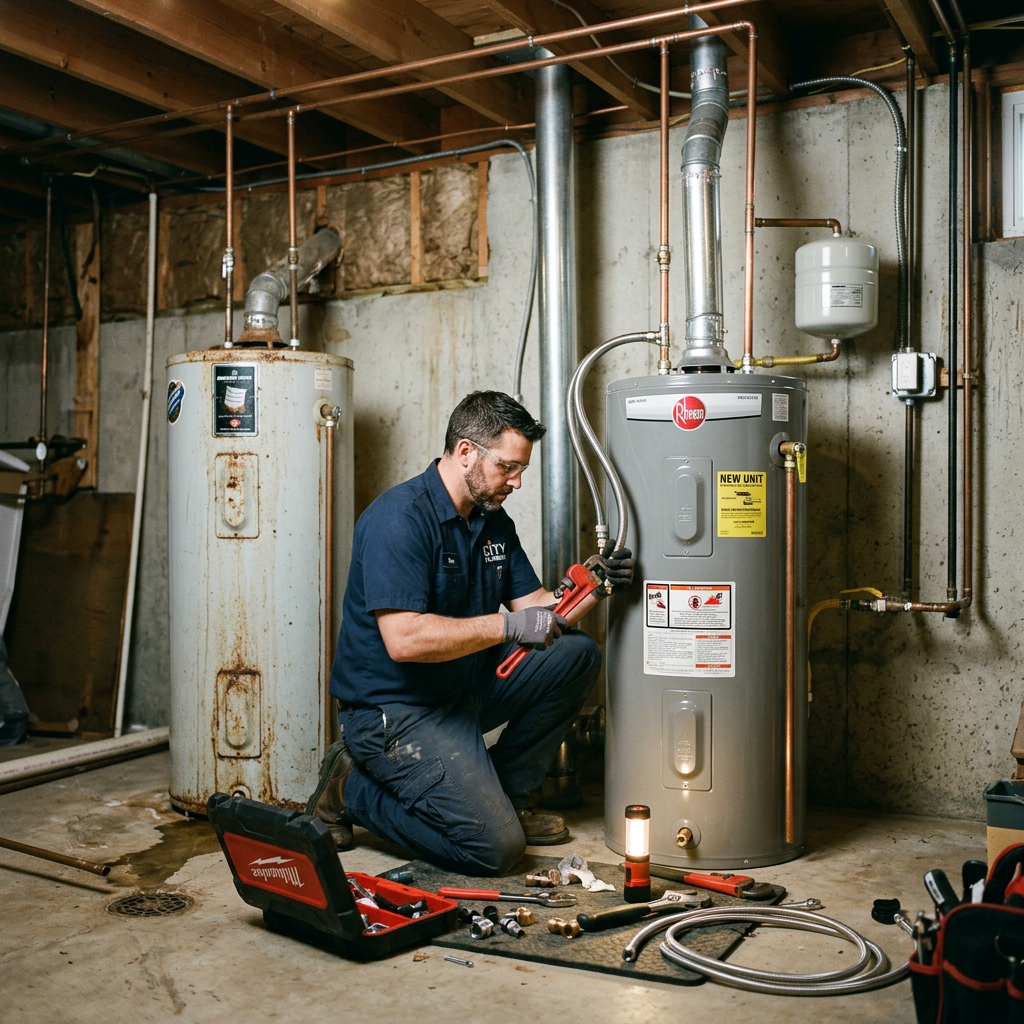
If your water heater just failed or you suspect it’s on its last legs, you need straightforward answers – not a sales pitch. This guide covers everything Central Indiana homeowners need to know about hot water heater replacement, from recognizing warning signs and comparing gas, electric, and heat pump options to understanding real local costs and what happens on installation day. Peak Plumbing serves Mooresville, Plainfield, Greenwood, Franklin, Avon, and the Indianapolis west side, with dedicated teams for plumbing services in Avon and plumbing services in Martinsville, and we wrote this based on what our customers actually ask us.
Table of Contents
- Fast Answers for Central Indiana Homes
- When It’s Time to Replace Your Hot Water Heater
- Gas, Electric, and High-Efficiency Options
- How Much Does Replacement Cost in Central Indiana?
- DIY Installation vs. Professional Replacement
- Our Replacement Process (Step by Step)
- Energy Efficiency, Heat Pump Options, and Long-Term Savings
- Post-Installation Care
- Frequently Asked Questions
- Why Choose Peak Plumbing
- Schedule Your Replacement
Hot Water Heater Replacement: Fast Answers for Central Indiana Homes
If you have no hot water right now, here’s what you need to know before anything else.
Common emergency signs that point to replacement:
- No hot water at all despite the unit appearing to run
- Active leak or water pooling around the base of the tank
- Rusty or brown water coming from the hot water faucet – rusty water indicates a failing water heater
- Strange noises like rumbling or popping from the heater, which suggest sediment buildup
- Your breaker trips repeatedly or the gas pilot won’t stay lit
- Inconsistent water temperature, which may indicate heater failure
Water heaters typically last 10–15 years, but in Central Indiana, the combination of very hard water (around 280 parts per million) and cold basement locations can push that closer to 8–12 years. Leaks around the water heater signal a need for replacement rather than continued repair.
Peak Plumbing can often provide professional water heater installation and repair the same or next business day during normal hours (Monday–Friday, 8 am–6 pm). If your old water heater is under eight years old and the issue is a single failed element or thermostat, a repair may be worth it. But once you’re past ten years with recurring problems, a new water heater installation is usually the smarter investment.
We service and replace both gas water heaters and electric water heaters, with every install meeting current local building codes.
When It’s Time to Replace Your Hot Water Heater
Timing matters more than most homeowners realize. A slow-failing tank in a finished basement can cause thousands in water damage to drywall, flooring, and stored belongings, similar to the damage from failed sump pumps or storms that battery backup sump pumps are designed to prevent – all preventable with a planned heater replacement and by avoiding hidden plumbing leaks that go unrepaired.
Plan-ahead warning signs:
- Unit is over 10 years old
- Rumbling or popping sounds during heating cycles
- Slight moisture or seepage around the base or fittings
- Less hot water availability than you used to get – lukewarm hot showers when the house hasn’t changed
- Rising gas or electric bills with no other explanation
- Discolored water from hot taps (a sign the anode rod is spent)
Urgent signs that can’t wait:
- Active leak or tank bulging
- Strong gas smell near the unit
- Breaker tripping every time the unit fires
- Visible external corrosion or cracks
Central Indiana’s mineral-heavy hard water accelerates sediment buildup inside the storage tank. Seasonal temperature swings – especially freezing winters in uninsulated basements – add thermal stress that shortens a tank’s life.
Most manufacturer warranties cover the tank shell for 6–10 years. If your warranty has expired and you’re seeing any plan-ahead signs, schedule an inspection before finishing a basement or leaving for vacation. Replacing a hot water heater involves efficiency, safety, and proper capacity decisions that are easier to make when you’re not in a crisis. Key considerations include fuel type, capacity size, energy efficiency, and safety codes.

Gas, Electric, and High-Efficiency Options for Your New Unit
Choosing the right replacement comes down to your home’s existing setup, your household size, and how you use hot water. Here’s a practical comparison.
- Traditional gas water heaters: These use a gas burner to heat water stored in a tank. For a typical 2–4 person house, 40–50 gallon tank water heaters are standard. Gas recovery is fast, and natural gas or propane options are generally cheaper to operate than electric. They do require proper venting and combustion air, so location in the home matters. Natural gas is often cheaper to operate than electric in most Central Indiana homes with existing gas lines.
- Traditional electric water heaters: A solid choice for all-electric homes, townhomes, or rentals without gas service. They’re simpler to install (no venting), quieter, and have a lower upfront cost. The trade-off: electric heaters are widely available but less energy-efficient than other options, and operating costs can be higher depending on local electricity rates.
- Hybrid water heaters: These use heat pump technology for efficiency, pulling heat from the surrounding air rather than generating it from scratch. High-efficiency models use 10% to 50% less energy than standard models. They work best in basements or garages with enough space and moderate temperature. They do produce some noise from the compressor and fans.
- Tankless water heaters: Tankless units provide endless hot water on demand by heating water as it flows through the unit. The smaller footprint saves space, but tankless water heater installation often requires gas line or venting upgrades. Upfront cost is higher, but a tankless model eliminates standby heat loss entirely.
Traditional tank water heaters range from 23 to 80 gallons. Tank sizing should match the First Hour Rating to meet peak usage demands. Select a tank size based on household size and peak water usage – a family typically requires a larger capacity tank for hot water, especially in larger households with back-to-back hot showers, laundry, and dishwasher use. Matching the fuel type is essential when replacing a water heater.
A higher Uniform Energy Factor (UEF) means better efficiency and lower monthly bills across both gas water and electric water systems. Solar water heaters are an option for increased energy efficiency, though they’re less common in Central Indiana, and they work best when your overall plumbing system is sized for modern water usage.
Real example: A typical Mooresville family of four replacing a 15-year-old 40-gallon gas unit with a new 50-gallon high-efficiency model (UEF around 0.81) can expect faster recovery time between hot showers and roughly 10–20% lower gas bills – saving $60–$120 per year. Peak Plumbing helps size the new unit based on bathrooms, fixtures, and simultaneous demand so you don’t end up with lukewarm disappointment.
How Much Does Hot Water Heater Replacement Cost in Central Indiana?
These are realistic local ranges for 2026, not vague national averages.
Type | Installed Price Range |
|---|---|
40–50 gal gas storage tank | $1,100 – $1,800 |
40–50 gal electric water heater | $900 – $1,400 |
Heat pump water heater | $2,000 – $3,500 |
Tankless gas (whole-home) | $2,800 – $4,500 |
The average upfront cost for a water heater ranges from $600 to $3,900 depending on type and complexity. Professional installation costs for tank-style heaters range from $150 to $450 in labor, while tankless water heater installation costs range from $600 to $1,900 for labor alone. Switching from tank-style to tankless can cost an additional $150 to $2,500 for gas line and venting modifications. |
What drives price up:
- Larger tank size or higher GPM rating on tankless units
- Difficulty of access – installation in hard-to-access locations like crawlspaces increases costs significantly compared to an open basement
- Gas line extensions, venting changes, or electrical panel upgrades
- Bringing older installations up to current plumbing codes
- Permit fees: permits for water heater installation typically cost between $25 and $300, varying by local municipality (Mooresville, Plainfield, Greenwood, Franklin, Avon each have their own requirements)
Local code requirements often necessitate permits and inspections for water heater replacements. Peak Plumbing’s typical quote includes removal and disposal of your old unit, new shut-off valves as needed, a drip pan, T&P discharge line, basic piping connections, startup, and testing. You receive an upfront, written estimate before work begins. If hidden issues like rotten flooring or unsafe venting are discovered, we discuss them with you before proceeding.
To get a faster ballpark estimate, call, text, or email us a photo of your existing hot water heater’s data plate and the surrounding area.
DIY Installation vs. Professional Heater Replacement
DIY installation can save hundreds in labor costs – that’s real. But here’s what’s actually involved, and why most installations should be handled by a licensed pro.
Risks of diy installation:
- Electric water heater hazards: Shock risk from incorrect wire sizing, failed electrical connections that trip breakers or overheat. Correctly disconnecting water lines and power sources is required during replacement, and mistakes here are dangerous.
- Gas water heater hazards: Gas water heater installations involve dangerous gas line connections. Improper venting causes carbon monoxide buildup and backdrafting, especially in tight mechanical rooms. Even a small error with gas leaks can be life-threatening.
- Any tank: Poorly sealed fittings lead to slow leaks and potential water damage. Incorrect T&P valve discharge piping creates a safety hazard. Water heaters typically weigh several hundred pounds even when drained, making handling difficult without proper equipment.
Improper DIY installation can void your water heater warranty – most manufacturers require licensed installation for full warranty coverage. Insurers may also deny claims if a non-permitted installation leads to water or fire damage. Local permits may be required, and water heaters should be installed according to local building codes, just as professional drain and sewer camera inspections must follow safety and code standards. Shutting off utilities is a crucial first step in replacing a water heater, and you must ensure compliance with local regulations.
We’ve seen Indianapolis-area basements where a DIY project resulted in a hidden slow leak behind drywall, leading to mold that cost more to remediate than the water heater itself. A code-compliant professional installation from Peak Plumbing – licensed, insured, permitted, and inspected – prevents exactly that.
Bottom line: Flushing sediment or adjusting temperature settings can be reasonable DIY tasks. But when you need to install a water heater – especially gas models – call a licensed pro. The peace of mind and warranty coverage are worth it.

Our Hot Water Heater Replacement Process (Step by Step)
Peak Plumbing follows a consistent process so you know exactly what to expect on installation day, and we bring the same attention to detail we use when upgrading plumbing in older Indiana homes.
Our technician arrives, does a quick walk-through, and confirms the selected new unit and placement. We protect nearby flooring and belongings before starting any work.
Next, we safely shut down gas or electric power and the water supply. We drain and remove your old hot water heater, hauling it off-site for proper disposal.
Before setting the new unit, we inspect existing water lines, the gas line or electrical connections, and venting. If anything is unsafe or out of code, we discuss upgrades with you before proceeding. Most installations follow a straightforward path, but older homes sometimes reveal surprises.
The new unit goes into place – or gets wall-mounted for tankless where applicable. We install a drip pan, secure stability strapping where required, and connect water lines with appropriate materials. The T&P valve and discharge piping are installed or verified, and gas or electrical connections are made according to code.
We fill the system, purge air, and check every fitting for leaks. Gas pressure or electric elements are adjusted per manufacturer specs. The thermostat gets set to 120°F for safety, and we verify hot water is flowing at multiple fixtures before leaving.
Before we go, we clean up the workspace, walk you through the new equipment, show you how to shut things off in an emergency, and provide warranty registration and paperwork.
Energy Efficiency, Heat Pump Options, and Long-Term Savings
Water heating accounts for about 18% of home energy use. With utility rates climbing in Central Indiana, the efficiency of your replacement unit directly affects your monthly bills for years, and pairing it with properly maintained water treatment systems helps protect that investment and your plumbing over time.
Newer gas water heaters and electric water heaters are significantly more energy efficient than 15-year-old models thanks to improved insulation, burner and element design, and electronic controls. But heat pump water heaters represent the biggest leap – they move heat from surrounding air rather than generating it, cutting electricity use by 50% or more compared to standard electric resistance tanks.
Heat pump models are a great fit if you have a basement or garage with enough space and air volume, plan to stay in your home five or more years, and want to save on energy costs. They also cool and dehumidify the surrounding space – a bonus in Indiana summers. Indiana offers rebates through programs like the Indiana Energy Saver Program and local utility co-ops, with heat pump rebates up to $1,750 for qualifying households.
Quick comparison: A standard electric water heater might cost $500–$600 per year to operate. A new heat pump model performing the same job can bring that down to $200–$250 per year. Efficiency improvements can lower utility bills throughout the lifespan of the new heater.
Tips to save regardless of unit type:
- Insulate accessible hot water pipes to reduce heat loss
- Set the temperature to 120°F unless a mixing valve setup requires higher
- Install low-flow showerheads to reduce demand without sacrificing comfort
- Schedule annual maintenance to maintain peak performance and flow
Post-Installation Care: Temperature, Maintenance, and Extending Lifespan
A new water heater is an investment. Simple care can push a unit’s longer lifespan from 8–10 years toward 12–15 years.
Thermostat setting: 120°F is the recommended sweet spot – it prevents scalding (especially important for children and older adults), reduces mineral scaling, and helps save on energy. If immunocompromised household members need higher temperatures for sanitation, a mixing valve setup allows a higher internal tank temperature while delivering safe water at the faucet.
Homeowner-friendly maintenance:
- Test the T&P relief valve annually by lifting the lever briefly (follow manufacturer instructions – have a bucket ready)
- Drain two to three gallons from the tank once or twice a year to flush sediment, especially critical with Central Indiana’s hard water
- Visually inspect the base of the tank and fittings for early signs of leaks or corrosion
Leave these to a pro: Anode rod inspection and replacement, burner or element diagnostics, and combustion testing on gas models. These tasks require tools and knowledge that go beyond typical homeowner maintenance.
If you notice rusty water, new noises, or slow recovery from your system, call Peak Plumbing. These issues can often be addressed with a repair before a complete failure forces emergency replacement. Set a calendar reminder for an annual checkup – ideally before winter, when demand for hot water peaks across Central Indiana.

Frequently Asked Questions About Hot Water Heater Replacement
These answers come from real questions Peak Plumbing hears from Central Indiana homeowners every week.
How long does it take to replace a hot water heater?
A straightforward like-for-like replacement – same fuel type, same location – typically takes about 2–4 hours on site. More complex jobs like relocating the heater, running a new gas line, or switching to a heat pump or tankless system can extend into most of a day. For standard replacements during normal business hours, you’ll have hot water again the same day.
Do I need a permit to install a new water heater in Central Indiana?
Permit requirements vary by city or county. Indianapolis, Mooresville, Greenwood, and other local municipalities each have their own rules. Peak Plumbing handles permits whenever required. Skipping permits can create problems during home sale inspections and may give your insurer grounds to deny a claim after a water or fire incident. Permit fees are typically modest – usually $25 to $300 – compared with the protection they provide.
Should I switch from gas to electric or from electric to gas?
Key decision points: Does your house have gas service? What’s the cost of running new gas lines or upgrading your breaker panel? What are the long-term energy costs for each fuel in your area? Many Central Indiana homes already have gas service, making gas water heaters a cost-effective choice. All-electric homes may benefit from upgrading to a heat pump model rather than switching fuels. Peak Plumbing evaluates your existing setup and walks you through pros, cons, and cost for any propane, gas, or electric change.
How big should my new hot water heater be?
Common sizes are 40, 50, and 75 gallons. A couple can usually get by with a 40-gallon tank. Families with kids doing back-to-back hot showers, running laundry, and using the dishwasher often need a 50-gallon or larger unit. Multi-generational homes or larger households may benefit from a 75-gallon tank or a tankless system. Peak Plumbing asks targeted questions about your usage to recommend the right size – not just “whatever is there now.”
What temperature should my new water heater be set to?
120°F is recommended by safety organizations to reduce scald risk and save energy. If a higher internal temperature is needed (for immunocompromised occupants or certain commercial uses), a mixing valve should be professionally installed to deliver safe water at the faucet. Test the temperature at a hot water faucet and adjust gradually following manufacturer guidance.
Will you haul away my old hot water heater?
Yes. Peak Plumbing removes and disposes of your old unit as part of most standard water heater replacement and installation services. You won’t be left with a bulky, rusted tank in your garage or basement.
Why Choose Peak Plumbing for Hot Water Heater Replacement?
Peak Plumbing is a locally owned, full-service plumbing company – not a distant call center or franchise. When you call, you’re talking to people who know Central Indiana homes and stand behind their work as a local licensed plumber in Central Indiana.
- Licensed and insured plumbers experienced with gas water heaters, electric water heaters, tankless systems, and heat pump models
- Honest, upfront pricing with clear explanations and no high-pressure sales tactics
- Respect for your home: shoe covers, floor protection, and thorough cleanup after every heater replacement
- Local knowledge: We know the typical installation layouts in Mooresville, Plainfield, Greenwood, Franklin, and Avon basements, garages, and utility closets
- Complementary services: drain and sewer work, water treatment systems for hard water issues, and sump pump installation and battery backup solutions that often tie directly into water heater performance
Our repeat customers and word-of-mouth referrals across Central Indiana neighborhoods are our best proof that we do this work right, and many first find us while looking for a trusted plumber in Central Indiana.
Ready for Reliable Hot Water? Schedule Your Replacement
Don’t wait for a cold shower or a flooded basement to take action. Whether your old unit is showing warning signs or has already failed, Peak Plumbing is ready to help.
Reach out the way that’s easiest for you:
- Call during business hours (Monday–Friday, 8 am–6 pm)
- Text us a photo of your existing hot water heater for a faster estimate
- Email or use our website contact form
Request a no-obligation quote for gas, electric, tankless, or heat pump new water heater installation. You’ll get dependable providing hot water, lower risk of water damage, better energy efficiency, and a replacement done right the first time by Peak Plumbing.
Leave a Reply