




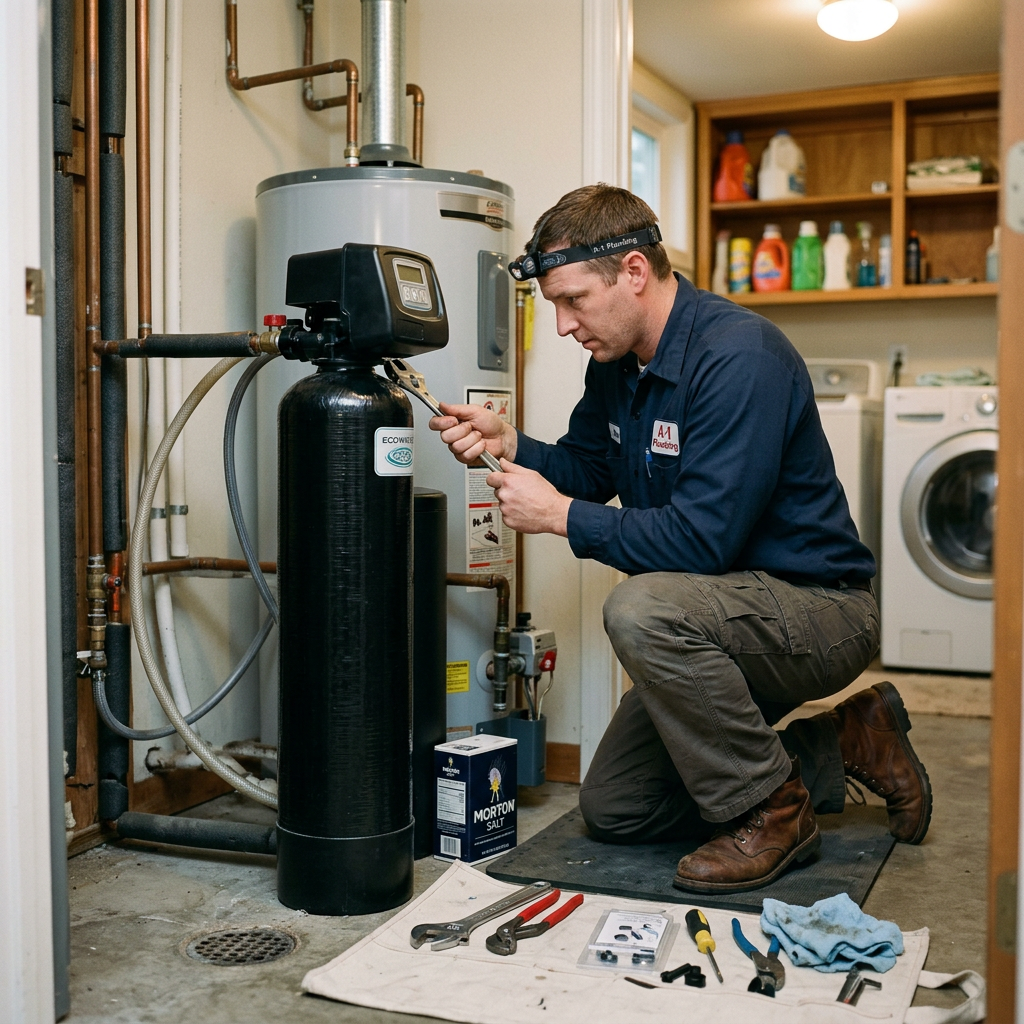
If your tap water has started tasting off, leaving scale on your faucets, or trickling slowly from your reverse osmosis faucet, your water treatment system is telling you something. For homeowners and small businesses across Central Indiana, these problems are more than an inconvenience-they can damage appliances, affect your family’s drinking water, and lead to expensive emergency repairs if ignored. This complete guide walks you through the most common signs of trouble, how professional repair works, realistic costs, and what you can do to keep your water systems running efficiently for years to come.
Table of Contents
- Common Signs Your Water Treatment System Needs Repair
- How Professional Water Treatment System Repair Works
- Repair Costs and When to Replace Your Water Treatment System
- DIY vs. Professional Water Treatment System Repair
- Preventive Maintenance for Softeners, Filtration, and Reverse Osmosis Systems
- Why Choose Peak Plumbing for Water Treatment System Repair in Central Indiana
- FAQ About Water Treatment System Repair
- Ready to Restore Clean, Great-Tasting Water? Contact Peak Plumbing
Common Signs Your Water Treatment System Needs Repair
Most Central Indiana homeowners first notice something is wrong when their water starts to taste different, smell unusual, or leave white residue on surfaces. Changes in water taste, smell, or color almost always indicate an issue with your treatment system that needs attention before it gets worse.
Common water treatment system issues include scaling and mechanical failures. Scaling is caused by hard water deposits such as calcium and magnesium-and in Mooresville, Plainfield, and Greenwood, where the limestone bedrock makes water naturally hard, these problems show up fast, and seasonal changes in spring can make hard water problems even worse. Watch for soap that won’t lather, stiff laundry, spotting on dishes, and dry skin even though your water softener appears to be running.
For a water filtration system, the most common signs include cloudy water, visible sediment, chlorine or metallic taste, and rotten-egg or musty smells from your tap water or ice. These changes can appear suddenly after heavy rain or city main work that stirs up sediment. Common issues in water treatment systems include clogged filters and mineral scaling, and clogged filters can be caused by sediment, dirt, rust, or biological growth.
Reverse osmosis systems show different symptoms: a slow trickle from the RO faucet, a storage tank that won’t refill, water that tastes flat or salty, or the system operating constantly without shutting off.
With your brine tank, look for a solid salt bridge forming across the top, water levels that are too high or too low, brown sludge at the bottom, or dramatic month-to-month changes in salt consumption.
Noisy operation-hissing valves, pulsing pipes-and leaks around the media tank or RO manifold are universal warning signs. Clogged filters can lead to inefficient water systems, and common problems in water treatment systems lead to low water pressure and equipment damage. Malfunctioning systems can cause health problems from contaminants, so if multiple signs appear at once, schedule service rather than waiting for a complete failure.

How Professional Water Treatment System Repair Works
Peak Plumbing’s licensed technicians follow a step-by-step diagnostic process so you understand exactly what’s wrong before any repair begins.
The initial visit starts by confirming symptoms with you, checking whether you’re on city or well water, reviewing your system’s age and brand (EcoWater, Pentair, Culligan, Whirlpool, or others), and performing an on-site water test for hardness, iron, chlorine, and sulfur. Proper calibration of sensors is necessary for effective water treatment, and this testing phase ensures accuracy.
Technicians then inspect specific components based on your system type:
- Water softeners: Control valve, resin or media tank, brine tank, and drain line. Water softeners eliminate hard water minerals like calcium and magnesium through ion exchange, and water softener regeneration is necessary for optimal performance. Common repair actions include cleaning or replacing fouled resin, clearing salt bridges, fixing stuck valves, reprogramming regeneration cycles based on actual household usage, and flushing iron or sediment.
- Filtration systems: Filter housings, cartridges, O-rings, and bypass valves. Water filtration systems remove impurities and sediments from water. Repairs often involve replacing a clogged filter (carbon or sediment), correcting pressure-loss issues, resealing leaking housings, and disinfecting systems to prevent bacterial growth inside tanks and pipes. Carbon filters can remove odors caused by chlorine or chloramine, and using pre-treatment methods can improve filter performance. Common solutions to low water flow include replacing or cleaning filters and inspecting pumps.
- Reverse osmosis systems: Pre-filters, the semipermeable membrane, post-filter, storage tank pressure, and shutoff valve. Reverse osmosis systems filter contaminants using a semipermeable membrane, and membrane fouling in RO systems can cause low permeate flow.
Peak Plumbing provides clear, written repair options-parts, labor, and timeline-so Mooresville and surrounding homeowners know what to expect. After every repair, technicians re-check hardness and chlorine levels, verify regeneration or backwash cycles, and confirm strong, clean water flow at key fixtures like the kitchen sink and refrigerator line.

Repair Costs and When to Replace Your Water Treatment System
Repairing a water filtration system is cheaper than replacement in most situations, but at a certain age or damage level, new equipment becomes the smarter long-term investment.
Here are realistic 2026 repair cost ranges for Central Indiana:
Repair Type | Typical Cost Range |
|---|---|
Minor softener service (salt bridge, brine tank cleaning) | $150–$200 |
Mid-range repair (valve rebuild, RO membrane replacement) | $200–$400 |
Major work (media/resin replacement, full overhaul) | $400–$1,000 |
Diagnostic/service call fee | $50–$100 |
Factors that affect cost include system type (basic softener vs. multi-stage water filter system vs. reverse osmosis), brand and parts availability, age, installation location (easy basement access vs. tight crawlspace), and whether plumbing corrections are needed from prior DIY work. Replacement costs for water filtration systems can reach several thousand dollars. |
Practical rules for deciding repair vs. replacement:
- Water softeners can last a decade or longer with proper maintenance, but units over 12–15 years old may have obsolete parts
- Repeated service calls within 12 months signal deeper issues
- Major cracks in tanks or unsupported electronics point toward replacement
Peak Plumbing helps homeowners compare options with side-by-side cost estimates over 3–5 years, including salt, replacement filters, and maintenance expenses. Newer high-efficiency softeners and filtration systems reduce salt and water usage, protect water heaters and appliances, and improve resale value-important for families in fast-growing suburbs like Avon and Franklin. Whole-home water treatment systems improve taste and remove contaminants, making upgrades worthwhile. Always call for an assessment before purchasing big-box replacements that may not be sized correctly for local hardness levels.
DIY vs. Professional Water Treatment System Repair
Homeowners can safely handle some basic tasks, but certain repairs require a licensed plumbing service to protect both water quality and your home’s plumbing system, especially in older homes where the plumbing may not be built for today’s water usage.
Appropriate DIY tasks include:
- Checking salt level and breaking up minor salt bridges
- Cleaning the brine tank annually
- Replacing easily accessible sediment filters or carbon cartridges on whole-house systems
- Swapping twist-off cartridges on under-sink water filter units following the manufacturer’s manual
Routine maintenance includes inspecting and replacing filters on schedule. Even simple tasks should follow specific instructions-correct filter orientation, proper sanitizing steps, and correct brine tank refill levels-to avoid voiding warranties. Activated carbon filters are commonly used in water filtration systems and are straightforward to replace filters when you follow the manual.
Jobs best left to professionals include diagnosing pressure drops across multiple faucets, repairing leaks at copper or PEX connections, reconfiguring bypass valves, rebuilding control valves, re-bedding resin or media tanks, and any work involving cutting, soldering, or repiping. Water filtration systems remove impurities and chemicals from water, but an improperly installed system can introduce cross-connection risks or leave bacteria-friendly stagnant water in bypassed pipes.
Local code compliance matters in Central Indiana communities-backflow prevention requirements, proper drain routing for regeneration water, and inspections are things licensed plumbers like Peak Plumbing navigate daily. Even seemingly minor drips or moisture around fittings can signal small plumbing leaks that become costly if ignored. Use your system’s manual for routine care, but contact a professional if you see persistent leaks, electrical control issues, or unexplained changes in water taste despite filter replacement.
Preventive Maintenance for Softeners, Filtration, and Reverse Osmosis Systems
Regular maintenance is the easiest way to avoid emergency breakdowns and get full life from a water treatment system, especially in hard water areas of Central Indiana. Preventive maintenance can help avoid many common water treatment system failures.
Water softener annual checklist:
- Check and clean the brine tank
- Keep salt level between one-third and two-thirds full
- Ensure brine line and drain line are unobstructed
- Run a manual regeneration after major service
- Test hardness at least once a year
Filtration system schedules:
Water filters should be replaced every three to six months. Whole home filters typically last three to six months before replacement depending on water conditions. Iron reduction media should be checked yearly, and UV lamp replacement on disinfection systems is typically needed every 12 months. Water filtration systems lose efficiency over time, and exhausted treatment media can lead to poor water quality.
Reverse osmosis maintenance:
Replace pre-filters and post-filters about every 6–12 months. Plan for membrane replacement roughly every 2–3 years depending on incoming water quality. Sanitize the system, including the storage tank, during major service to keep your drinking water consistently clean.
Annual maintenance includes a 10-point inspection of the system, and monitoring pressure and flow rate trends is essential in water treatment system maintenance. Regular filter changes are essential for maintaining water quality, and regular maintenance prevents costly emergency repairs and breakdowns. Annual maintenance can extend the lifespan of water filtration systems and prevents costly breakdowns in filtration systems.
Businesses in Mooresville, Greenwood, and nearby areas with high daily water use-salons, small restaurants, dental offices-should plan more frequent checks. Peak Plumbing can set up reminder schedules or recurring service so you never have to track filter dates yourself, and their water treatment system repair and replacement services make it easier to keep up with changing water quality needs. The payoff is real: longer appliance life for dishwashers, water heaters, and ice makers, fewer plumbing clogs from mineral scale, and better tasting water that encourages your family to drink from the tap instead of buying bottles.

Why Choose Peak Plumbing for Water Treatment System Repair in Central Indiana
Peak Plumbing specializes in both standard plumbing and water treatment system repair, serving Mooresville and surrounding Central Indiana communities including Plainfield, Franklin, Greenwood, and Avon with comprehensive residential and commercial plumbing services.
What sets Peak Plumbing apart:
- Licensed, insured plumbers and certified technicians experienced with major water softener, filtration, and reverse osmosis brands, backed by a trusted local Central Indiana plumbing company
- Deep familiarity with the hardness and mineral content common to Central Indiana city and well water, and typical problems seen in older Indiana homes with aging plumbing systems
- Honest, written estimates before work begins with clear explanations-no jargon, no pressure
- Appointments Monday through Friday, 8 am–6 pm, with prompt responses for urgent water quality issues, and dedicated teams providing reliable plumbing services in Martinsville, including plumbing services for Avon homeowners and businesses
- Related repair services that protect clean water: water heater installation and repair, sump pump service, fixture upgrades, and whole-home repiping when corroded pipes contribute to rust in treated water
Technicians respect your home, clean up work areas, and test systems with you before leaving to confirm improved water taste, clarity, and flow. Peak Plumbing’s goal is long-term reliability-repair recommendations are based on what the plumber would do in their own home, not on upselling.
FAQ About Water Treatment System Repair
These FAQs address the most common questions Central Indiana homeowners ask before scheduling water treatment system repair with Peak Plumbing.
How often should my water softener be serviced?
Most water softeners in Central Indiana do well with a professional checkup about once a year, including testing hardness, verifying regeneration settings, and inspecting the brine tank and valves. Very hard water, high household usage, or visible performance issues may justify more frequent service.
Can I still use my water if my filtration system isn’t working?
In most municipal water supply situations, city-treated water is still safe, but taste, odor, and scale issues will worsen without your home’s treatment system. If water looks discolored, smells strongly of sulfur, or if anyone in the home is immunocompromised, use bottled or alternate drinking water until the system is inspected.
How long does a typical water treatment repair appointment take?
Straightforward repairs like replacing filters, clearing salt bridges, or swapping common valves often take 60–90 minutes. More complex work such as re-bedding a media tank may require a few hours. Peak Plumbing technicians provide time estimates after diagnosing the issue on-site.
What brands of water treatment systems can Peak Plumbing repair?
Peak Plumbing services Pentair, Fleck-based systems, EcoWater, Culligan, Whirlpool, GE, and many privately labeled softeners and filtration systems found across Central Indiana. Even if the exact brand is unknown, technicians can usually identify and source compatible parts after inspection.
Will repairing my system really improve my drinking water taste?
Restoring proper filtration or softening often leads to noticeably great tasting water with reduced chlorine taste, less metallic flavor, and clearer ice. Pay attention to coffee, tea, and cooked foods after repair-they often show the biggest improvement.
Do you offer commercial water treatment system repair?
Peak Plumbing serves both residential and light commercial customers, including offices, salons, small restaurants, and shops throughout Central Indiana. The team can coordinate repairs around business hours to minimize downtime for staff and customers.
Ready to Restore Clean, Great-Tasting Water? Contact Peak Plumbing
Untreated hard water, a failing water filtration system, or a struggling reverse osmosis system can affect everything from your morning coffee to your water heater’s lifespan. Regular maintenance prevents costly emergency repairs, and it becomes especially important when summer heat puts extra stress on your plumbing system, but when something goes wrong, fast and efficient repair services make all the difference.
If you’re in Mooresville, Plainfield, Franklin, Greenwood, Avon, or nearby Central Indiana communities, contact Peak Plumbing to schedule service for a water treatment system inspection or repair. Don’t wait for a full breakdown-reach out as soon as you notice common signs like scale buildup, cloudy water, or strange tastes.
Peak Plumbing can also discuss solutions for system upgrades, new installation, or integrating filtration with other plumbing improvements during the same visit. Call, text, or email today to keep your family or business supplied with reliable, clean water from a team that’s licensed, honest, and local.